Amazon Listing Hijacked: What to Do When Another Seller Joins Your Listing

 Chat on WhatsApp
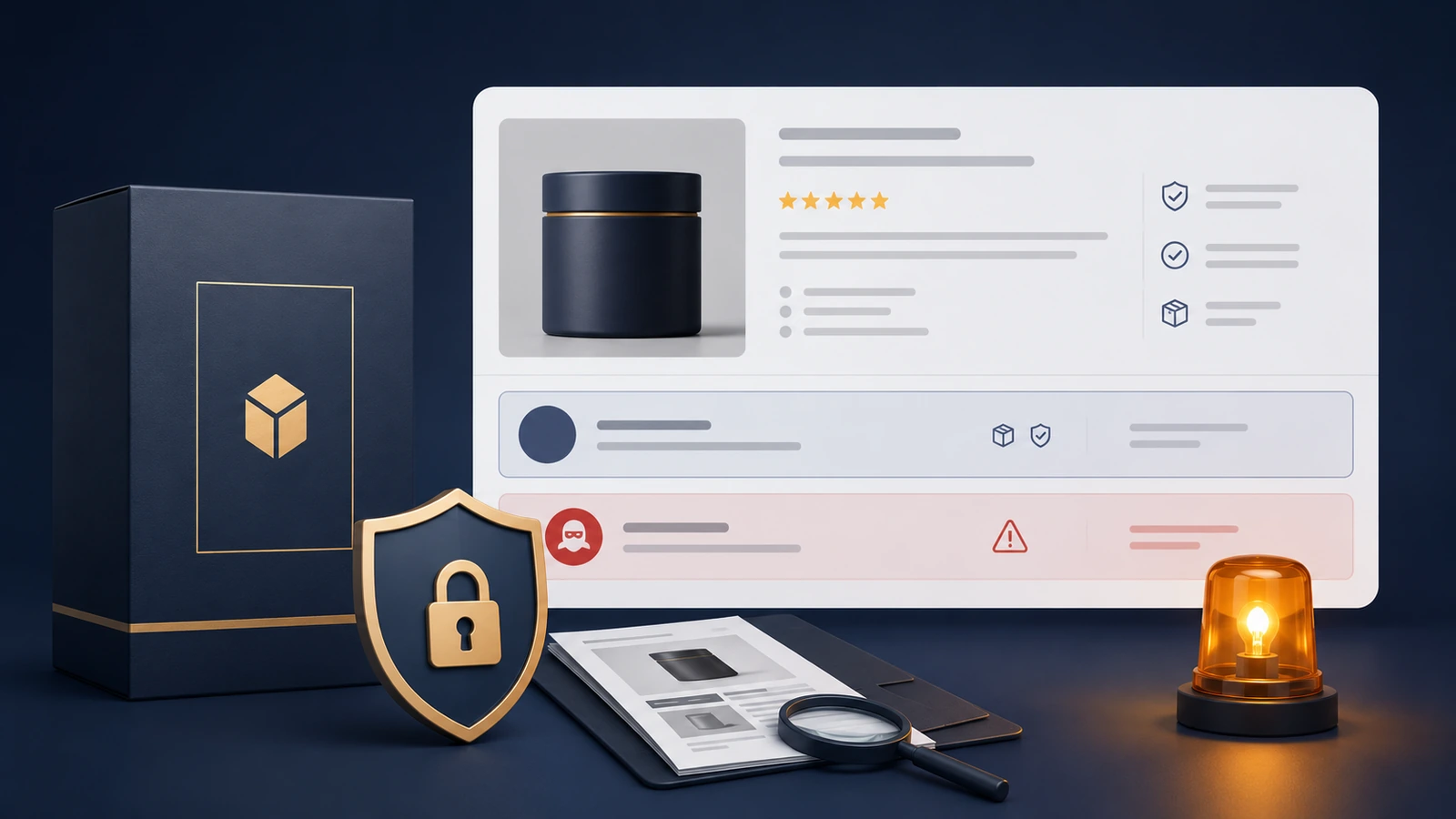
Opening a listing you've built and finding an unfamiliar name in the "Other Sellers on Amazon" section — sometimes at a lower price, sometimes visibly lower quality in the reviews that follow — is one of the more unsettling moments in running a private label brand. It's also a problem with a clear, well-established response process, provided it's approached methodically and calmly rather than in a panic, with the right documentation and reporting channel used from the outset.
If your listing has been hijacked and you need help resolving it, message me directly on WhatsApp — I manage brand protection and listing issues for private label sellers, and this is a problem with a genuinely reliable resolution path once handled correctly.
Confirming it's actually a hijack
Before reacting, confirm what's actually happening — not every unfamiliar seller on a listing is a genuine hijack:
- An authorised reseller or wholesale account you've knowingly supplied, appearing as expected — not a hijack.
- A catalogue matching error, where a genuinely different product has been incorrectly linked to your ASIN — a real problem, but a different one, resolved through a listing correction request rather than a brand protection report.
- An unauthorised third party selling your exact product without permission — whether genuine grey-market stock or counterfeit — this is the actual hijack scenario this guide addresses in detail below.
Check the offer listing page directly (via "See All Buying Options") for the seller's name, and cross-reference against any known distributors or resellers you've actually authorised, before assuming the worst.
Why hijacking happens on private label listings specifically
Private label products are a common hijacking target because the brand owner has already done the work of building demand, reviews, and ranking — a hijacker joining an established, well-performing listing gets immediate access to that demand without any of the marketing investment. This is meaningfully more attractive to a bad actor than creating a new listing from scratch, which is part of why successful, well-ranked private label products are disproportionately targeted compared to obscure or low-volume listings.
What to actually do, in order
1. Document the hijacker's offer immediately
Screenshot the offer listing page in full, along with the seller's name and any other visible details, the current price, and the date and time — this becomes your supporting evidence, and hijackers sometimes remove or alter their offer once they sense scrutiny, so capturing it promptly matters.
2. Check whether you're enrolled in Amazon Brand Registry
If enrolled, Brand Registry's Report a Violation tool is the fastest, most direct reporting path, and generally the one Amazon responds to fastest given the verified brand relationship it confirms. If not yet enrolled, this is worth prioritising urgently — both for this specific situation and because Brand Registry provides materially stronger protection against future hijacking attempts.
3. File a report through the appropriate channel
- Enrolled in Brand Registry: use Report a Violation, providing your brand documentation, the specific offer in question, and supporting evidence.
- Not yet enrolled: use Seller Central's general infringement reporting process, which is slower and less direct but still a legitimate path to escalate a genuine unauthorised seller.
4. Consider a test purchase for additional evidence
Buying from the hijacker's offer can provide direct evidence of counterfeit product or misrepresented stock — packaging discrepancies, quality differences, incorrect contents — which strengthens a report, particularly in a more ambiguous case. This isn't mandatory, but it's a useful option when the initial evidence alone might not clearly establish the violation.
5. Monitor the listing until the hijacker is actually removed
A report being filed isn't the same as resolution — check the listing regularly until the unauthorised offer is confirmed gone, and be prepared to follow up if Amazon's initial response doesn't resolve it, which does happen in more ambiguous cases.
A comparison of reporting paths
| Path | Speed | Strength of protection | Requirement |
|---|---|---|---|
| Brand Registry — Report a Violation | Fastest | Strongest | Enrolled in Amazon Brand Registry |
| Seller Central general infringement report | Slower | Moderate | No enrolment required, but weaker leverage |
| Legal/trademark enforcement (severe or repeat cases) | Slowest | Strongest for persistent bad actors | Registered trademark, often legal counsel involved |
For the overwhelming majority of hijacking incidents, Brand Registry's reporting tool resolves the issue without needing to escalate further — which is the strongest practical argument for enrolling before it's needed rather than during an active incident.
What if the hijacker doesn't stop, or keeps coming back?
A minority of cases don't resolve cleanly on the first report — a hijacker reappears under a different seller account, or disputes the violation claim in a way that delays resolution. If this happens:
- File a fresh report for each new occurrence, referencing the pattern and any prior case numbers, since a repeat offender pattern is itself useful evidence Amazon can act on more decisively than an isolated incident.
- Escalate to Amazon's Brand Protection team directly if standard reporting channels aren't resolving a genuinely persistent case — Brand Registry members have access to more direct escalation paths than unregistered sellers.
- Consider legal counsel for a genuinely persistent, high-impact bad actor, particularly one operating across multiple accounts or platforms — a cease-and-desist or formal legal action is a real, if more resource-intensive, option once standard reporting channels have been exhausted without resolution.
- Keep a running record of every incident, including dates, evidence, and case numbers — this builds a pattern that strengthens any escalation and makes each subsequent report faster to file.
Does a hijacking incident affect my own account health?
Generally no, directly — a hijacker operating on your listing is a violation of Amazon's policies on their part, not yours, and doesn't itself damage your seller performance metrics. Where it can cause indirect damage is through customer confusion: buyers who unknowingly purchase counterfeit or misrepresented stock from the hijacker sometimes leave negative reviews or file complaints against the listing generally, which can affect the product's overall review profile even though the fault lies with the unauthorised seller. This is a further reason to act quickly once a hijack is identified — the longer it runs, the more customer-facing damage accumulates before resolution.
What makes a listing a more attractive hijacking target
Not every listing carries equal risk, and understanding what raises the odds helps decide how much proactive monitoring effort is genuinely justified for a specific product:
- High sales velocity and strong rankings — the exact success that makes a listing valuable to you is what makes it valuable to a hijacker looking for immediate access to established demand.
- Products that are relatively easy or cheap to source or replicate, where a bad actor can obtain similar-looking stock without significant investment.
- Listings without Brand Registry enrolment, which both signals weaker protection to anyone monitoring for opportunities and genuinely provides fewer tools to detect and act quickly.
- Products in categories with known counterfeiting activity — certain categories (beauty, supplements, electronics accessories, branded apparel) see disproportionately more hijacking and counterfeiting attempts industry-wide.
- Listings without Amazon's Transparency programme, on products where unique unit-level codes would otherwise make it considerably harder for a hijacker to actually fulfil orders even if they did join the listing.
A seller with a top-performing listing in one of these higher-risk categories should weight proactive monitoring and protective measures more heavily than a seller with a niche, lower-volume product in a category with little historical hijacking activity — the baseline risk genuinely isn't uniform across all products.
Setting up ongoing monitoring instead of relying on chance discovery
Most sellers only discover a hijacker by chance — noticing an unfamiliar name while checking their own listing, or being alerted by a customer review referencing something that doesn't match their product. A more deliberate approach checks the offer listing page for your highest-value listings on a regular schedule, rather than relying on happening to notice. Several third-party brand protection and listing monitoring tools can also automate this, sending an alert the moment a new seller joins a protected listing, which closes the detection gap considerably faster than periodic manual checks and matters most on exactly the high-velocity, high-risk listings this guide has been describing.
A worked example of a hijack resolved quickly
A skincare brand discovered a new seller had joined their best-selling moisturiser listing at a price roughly 15% below the brand owner's own, with stock that several early buyers noted in reviews looked visibly different from the genuine product's packaging. The brand owner, already enrolled in Brand Registry from early in their launch, immediately screenshotted the offer and filed a Report a Violation case, attaching their brand documentation and the specific evidence of packaging discrepancy drawn from the customer reviews.
Amazon removed the unauthorised offer within roughly 48 hours of the report — a fast resolution directly attributable to having Brand Registry access and clear, specific evidence ready to submit immediately rather than needing to gather it under pressure after the fact. The brand owner also used the incident to tighten their own supply chain documentation, making any future report even faster to substantiate.
Common mistakes when responding to a hijack
- Panicking and dropping price to compete with the hijacker's offer, rather than reporting and removing it — this damages your own margin and doesn't address the actual problem.
- Not being enrolled in Brand Registry, which meaningfully slows down what should be a fast resolution once a hijack does occur.
- Waiting to gather "perfect" evidence before filing an initial report, when documenting what's visible immediately and filing promptly is usually more effective than delaying.
- Assuming a resolved case means it won't happen again — a well-performing listing remains an ongoing target, and monitoring should continue rather than stopping once one incident is resolved.
- Not tightening supply chain and distribution documentation after an incident, missing the opportunity to make any future report faster and stronger.
Preventing future hijacking attempts
- Enrol in Brand Registry if not already done — this is the single highest-leverage preventative step available.
- Register your trademark, since Brand Registry enrolment depends on it and trademark ownership itself provides additional legal standing against repeat or severe offenders.
- Monitor your best-performing listings regularly, since these are disproportionately targeted — a quick periodic check of the offer listing page catches a hijack early, before it's had time to generate negative reviews from confused customers.
- Keep clear, organised supply chain documentation (invoices, manufacturer agreements) readily available, so evidence for a report can be assembled quickly rather than searched for during an active incident.
- Consider Amazon's Transparency programme for higher-risk or frequently targeted products, which adds a unique product code requirement that makes it considerably harder for a hijacker to fulfil orders undetected.
Why acting fast matters more than acting perfectly
It's worth closing on this point directly: sellers sometimes hesitate before reporting a suspected hijack, wanting to be completely certain before raising it, or wanting to gather exhaustive evidence first. Given how quickly a hijacker's offer can generate confused customers and negative reviews, a prompt report based on clear, reasonable evidence — even if not exhaustive — is almost always the better choice than a delayed, perfectly documented one. Amazon's reporting process allows for follow-up and additional evidence after an initial report is filed, so waiting to have everything perfectly assembled before acting at all tends to cost more, in accumulated customer-facing damage and lost sales, than it saves in report quality or thoroughness.
If you're dealing with a hijacker right now, or want to put stronger brand protection in place before it happens, message me directly on WhatsApp — I help private label sellers set up Brand Registry, respond to active hijacking incidents, and put ongoing monitoring in place so it's caught early next time.
 Connect on LinkedInChat on WhatsApp
Frequently asked questions
How do I know if my Amazon listing has actually been hijacked?
Check the listing's offer page (via 'See All Buying Options' or the offer listing page) for sellers you don't recognise and haven't authorised to sell your product. A genuine hijack means an unauthorised third party is offering against your ASIN — as opposed to a legitimate reseller you knowingly supply, or a case of someone else's product being incorrectly matched to your listing, which needs a different response.
Is it always counterfeit product, or can a hijacker sell something else on my listing?
Both happen. Some hijackers source and sell genuine but unauthorised stock (grey market goods bought elsewhere and resold on your listing without permission); others sell counterfeit product entirely. Either is a real problem — grey market stock undermines pricing and brand control, while counterfeit product creates a direct quality and safety risk to your brand's reputation.
What's the fastest way to report a hijacker to Amazon?
Through Brand Registry's Report a Violation tool if you're enrolled (the fastest, most direct path for a registered brand), or through Seller Central's general 'Report Infringement' process if not yet enrolled. Having Brand Registry in place before a hijack happens meaningfully speeds up this process, which is one of several reasons enrolling early is worth prioritising.
Does Amazon Brand Registry actually prevent hijacking?
It doesn't prevent someone from attempting to join a listing, but it gives the brand owner considerably stronger tools to detect and remove unauthorised sellers quickly once they appear, along with additional listing protections not available to unregistered brands. It's a meaningfully stronger position than being unregistered, though not an absolute guarantee against every attempt.
Should I test-buy from the hijacker to get evidence?
This can provide useful evidence (packaging, product quality, authenticity) to support a report, and some sellers do this deliberately — but it should be done carefully, keeping all documentation, and isn't strictly required to file a report if other evidence (the offer itself, your own brand ownership documentation) is already clear.
How long does it typically take Amazon to remove a hijacker once reported?
It varies — a clear-cut case with strong supporting evidence through Brand Registry's tools can be resolved within a few days; a more ambiguous case, or one reported without registry access, can take considerably longer and may need follow-up. This variability is one of the strongest arguments for having Brand Registry and clean documentation in place before it's needed.
Ready to Grow Your Business?
Whether you're recovering an eBay account, launching an Amazon brand, improving your SEO, or scaling with AI automation, let's discuss the best strategy for your business.
Chat on WhatsApp Now